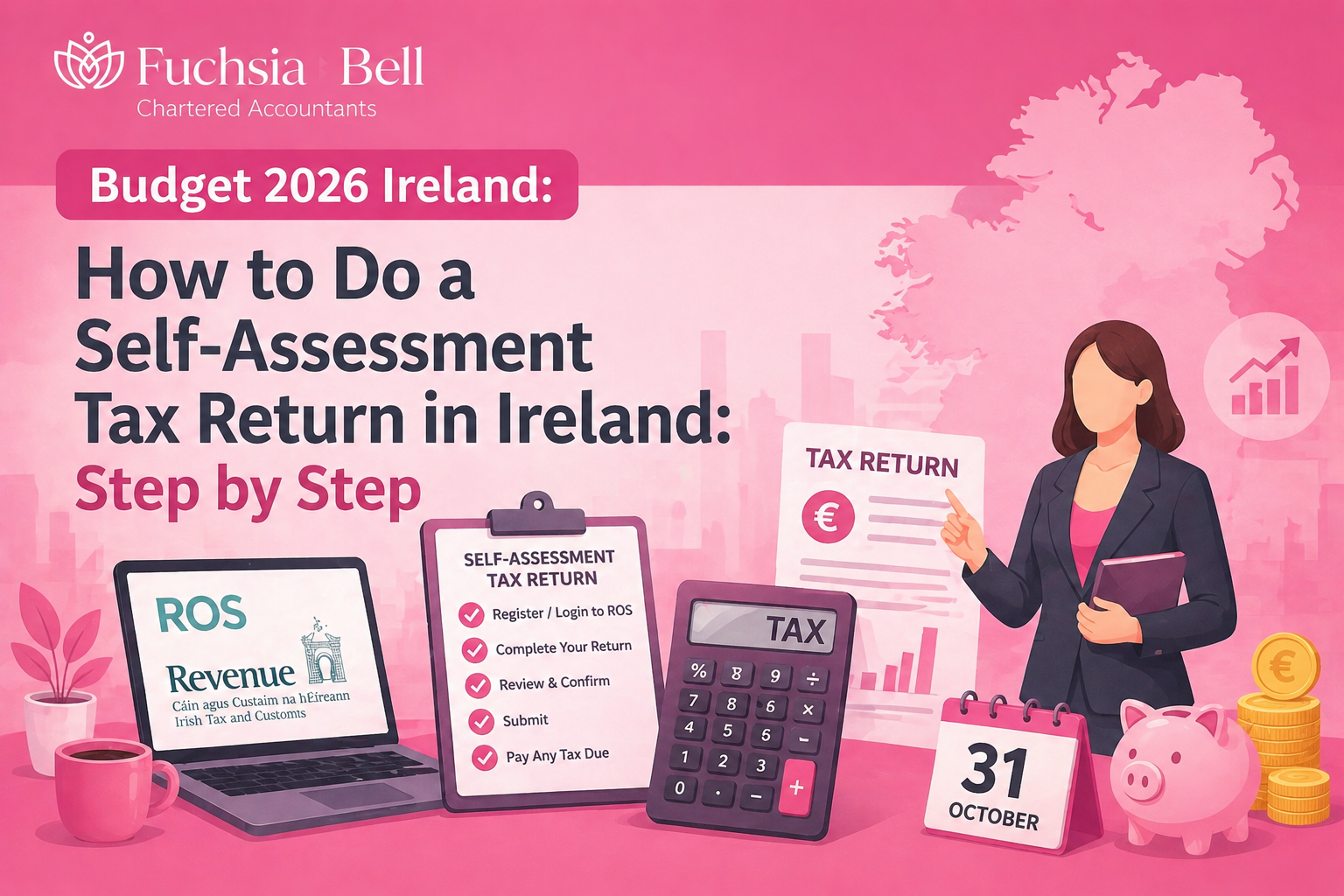
Key Takeaway: A self-assessment tax return in Ireland is called a Form 11. You file it through Revenue’s Online Service (ROS). The deadline for the 2025 tax year is 31 October 2026 by paper, or 18 November 2026 if you both file and pay online through ROS. Miss that deadline and a surcharge of 5% to 10% is added to whatever you owe. Most people who need to file a self-assessment return have no idea they are required to until Revenue writes to them. By that point, the return is usually already overdue.
Most People Who Need to File This Have Never Filed One
The PAYE system handles tax automatically for most employees. That gives a lot of people a false sense of security. Revenue takes care of it. Nothing to do.
Then they buy a property and start renting it out. Or they take on some freelance work alongside their day job. Or they become a director of their own company. And suddenly the automatic system is no longer enough.
The problem is that Revenue does not send a helpful reminder the moment you step outside PAYE. You are expected to know you are now a chargeable person and register for self-assessment yourself. If you do not, you will eventually hear from Revenue, usually when the return is already late and a surcharge has begun to accumulate.
Understanding self-assessment is not complicated. What it requires is knowing the rules, the deadlines, and the process. Once you have done it once, it becomes routine. This guide covers everything you need.
Who Has to File a Self-Assessment Tax Return in Ireland
Revenue uses the term chargeable person to describe someone who must file a Form 11 self-assessment return. You become a chargeable person if any of the following apply to you.
You are self-employed as a sole trader, freelancer, contractor, or in any business operated on your own account. This applies regardless of how much you earn. There is no minimum income threshold for self-employed individuals. If you trade, you file.
You are a proprietary director, meaning you own more than 15% of the shares in a company. This is one that catches a lot of people. Even if your salary is processed through PAYE and income tax is deducted correctly from every payslip throughout the year, a proprietary director must still file a Form 11 annually. That is a mandatory requirement, not optional. Our article on tax for company directors covers the full picture of what this means for director tax obligations.
You have non-PAYE income that meets either of two thresholds. If your net taxable non-PAYE income from all sources other than employment is €5,000 or more in a year, you must file. If your total gross non-PAYE income from all sources is €30,000 or more, you must file even if the net amount after reliefs comes to less than €5,000. Non-PAYE income includes rental income, investment income, dividends, foreign income, and freelance earnings.
You have capital gains to declare during the year. Even a PAYE employee who sells shares, an investment property, or any other asset that generates a chargeable gain must report those gains, either through the Form 11 system if they are already a chargeable person, or separately through a CGT return if they are not.
You wish to claim certain tax reliefs that cannot be processed through the PAYE system. Some reliefs, particularly those related to trade losses or certain property-based incentives, require a Form 11 to access.
The Difference Between Form 11 and Form 12
This distinction trips people up constantly.
Form 12 is for PAYE employees who have small amounts of additional income or want to claim reliefs that go beyond their standard credits. It is the simpler route and is available through myAccount. If your only non-PAYE income is below the €5,000 threshold and your gross non-PAYE income is below €30,000, Form 12 rather than Form 11 is the appropriate route.
Form 11 is the full self-assessment return for chargeable persons. It is filed through ROS, not through myAccount. It covers income from all sources, all applicable reliefs, preliminary tax, capital gains, and PRSI and USC across all income streams simultaneously.
The practical difference matters because the two systems do not overlap. If you file a Form 12 for a year when you should have filed a Form 11, Revenue will eventually notice and the return will be treated as incorrect. If you are not sure which applies to your situation, our income tax return service can assess that quickly and take care of the filing either way.
The Deadlines You Cannot Afford to Miss
Ireland operates a Pay and File system. That means the filing of your return and the payment of any tax owed both happen on the same date. There is no option to file now and pay later without incurring interest.
For the 2025 tax year, the deadlines are:
Paper Form 11: 31 October 2026 Online through ROS: 18 November 2026
The ROS extension is only available if you both file the return and pay the tax through ROS. If you file online but pay by cheque, you do not get the extension. If you pay online but post a paper return, you do not get the extension. Both actions must happen through ROS for the extended deadline to apply.
There is also a useful tactical option most people overlook. If you submit your completed Form 11 by 31 August 2026, Revenue will do the self-assessment calculation for you and tell you what you owe before the October deadline. That removes the risk of miscalculating your liability and gives you weeks to arrange the payment.
For the 2026 tax year, the return and payment are due by 31 October 2027, with an ROS extension typically to mid-November.
What Preliminary Tax Is and Why It Matters
When you file your 2025 Form 11 in October or November 2026, you are doing two things at the same time. You are paying any balance of tax still owed for 2025, and you are also paying preliminary tax for 2026.
Preliminary tax is an advance payment toward your current year liability. Revenue requires this to put self-assessed taxpayers on a similar footing to PAYE workers, who pay tax from every payslip throughout the year rather than in one lump sum.
To avoid interest on your 2026 preliminary tax payment, you must pay at least one of the following:
90% of your actual 2026 final liability, or 100% of your 2025 final liability, or 105% of your 2024 liability, if you are paying by direct debit
Most people use the 100% rule because it is simpler. Pay what you paid last year and you are covered regardless of how your income changes during the current year. If your income drops significantly, you may overpay preliminary tax and receive a refund after filing the following year’s return. If your income rises significantly, you may owe a balance at the next filing date but you will not owe interest provided you met one of the three thresholds above.
The preliminary tax payment is made through ROS at the same time as the return is submitted. It appears on the same payment screen as the balance of tax for the prior year. First-time filers sometimes miss this and only pay the prior year balance, which means they immediately have an outstanding preliminary tax liability from day one of the new system.
How to Register for Self-Assessment If You Are Not Already Registered
If you have not previously filed a Form 11 and you now need to, you must first register as a chargeable person with Revenue. This is done through myAccount or ROS.
Through myAccount, go to Manage My Record and select Register for a Tax. Choose income tax under self-assessment and complete the relevant fields including your start date, which is the date from which your self-employment or non-PAYE income commenced.
If you are registering as a self-employed sole trader, you use a TR1 form, which is available through myAccount. If you are a company and need to register the company itself for corporation tax, the process is different and involves a TR2 form.
Once registered, Revenue will generate a ROS digital certificate which gives you access to the full Form 11 filing system. Generating the ROS certificate can take up to a week by post, so registering well before the October deadline matters.
If you have been in receipt of rental income or non-PAYE income for some time and have never registered, that does not mean you have no obligation for those prior years. You should register now and file returns for any open years within the four-year lookback window. Doing this voluntarily before Revenue identifies you is always a better outcome than Revenue initiating an enquiry.
How to Complete the Form 11
The Form 11 is available through ROS and is structured in panels covering each type of income and claim. Most people are not filing across every panel. You complete only the sections that apply to your situation.
The sections most commonly completed by individuals are:
PAYE income from employment, which you can pre-populate from the data Revenue already holds from your employer’s payroll submissions.
Self-employment income, where you enter your business income and claim all allowable business expenses including materials, equipment, motor costs, professional fees, and any home office costs if you work from home as a sole trader. Revenue can request receipts and records for up to six years, so keeping organised records matters even though you do not submit them with the return.
Rental income, which requires you to calculate the net profit after deducting allowable expenses. Revenue treats rental income and employment income as separate streams for tax purposes. Our rental income tax guide covers exactly which expenses are deductible for landlords in Ireland. Common questions around claiming mortgage interest, insurance, repairs, and property management fees are all covered there.
Investment income and dividends, where you declare any income from shares, savings products, or foreign investments.
Capital gains, where you declare any disposals during the year, calculate the gain, apply the annual exemption of €1,270, and declare the net gain subject to CGT at 33%. CGT due is payable at different times from income tax, which I will cover in the FAQ below.
Tax credits and reliefs, where you claim the Personal Tax Credit, Employee Tax Credit if applicable, pension relief, medical expenses, and any other reliefs you are entitled to.
PRSI and USC are calculated automatically based on the income figures entered across each panel.
Common Mistakes That Cause Problems Later
The first and most costly mistake is missing the deadline. The 5% surcharge for a return filed within two months of 31 October applies to your total tax liability for the year, not just the balance owed. On a liability of €10,000, a late filing surcharge of 5% adds €500 immediately. The 10% surcharge that applies after two months adds €1,000. Interest on unpaid tax runs at 0.0219% per day from the deadline date.
The second common mistake is not paying preliminary tax on the first year. First-time filers often pay only the balance for the year they are filing and forget that preliminary tax for the current year is also due on the same day.
The third mistake is claiming expenses that Revenue does not allow. In a rental context, claiming repair costs incurred before the property was first let out is a common error. In a self-employment context, claiming personal expenses through the business without proper documentation is a frequent trigger for Revenue queries.
The fourth mistake is not declaring all income sources. A person who has a PAYE salary, rental income, and dividends from shares must declare all three on the Form 11 even if PAYE and DIRT have already been deducted from two of those streams. The Form 11 reconciles the full picture.
What Declaring Extra Income Actually Looks Like in Practice
A lot of people find self-assessment daunting because they picture a complex process with dozens of inputs. For most individuals, the actual return covers two or three income streams and takes a couple of hours to complete accurately if records are organised.
A typical example: a PAYE employee earning €55,000 per year who also earns €12,000 in rental income from a property they own.
They pre-populate their PAYE income from Revenue’s data. They enter their rental income of €12,000 and deduct allowable expenses. Say those expenses come to €4,000 in mortgage interest, €800 in insurance, and €600 in repairs, totalling €5,400 in allowable deductions. Their net rental profit is €6,600. That amount is added to their total income and taxed at the marginal rate, which in this case is 40%, generating €2,640 in additional income tax. USC and PRSI are also assessed on the rental profit.
Their Form 11 captures the full picture, reconciles against PAYE deductions already made, and calculates the net balance due. They pay that balance plus preliminary tax for the current year through ROS by 18 November.
If that person had also sold shares during the year and made a gain of €5,000, the gain above the €1,270 annual CGT exemption of €3,730 would be subject to CGT at 33%, generating a CGT liability of approximately €1,231. That CGT is reported on the Form 11 but paid separately by the CGT payment dates, not by the Form 11 deadline.
Frequently Asked Questions About Self-Assessment Tax Returns in Ireland
What is the deadline for filing a self-assessment tax return in Ireland in 2026?
For the 2025 tax year, the paper Form 11 deadline is 31 October 2026. If you file and pay online through ROS, the extended deadline is 18 November 2026. Both conditions must be met through ROS for the extension to apply. A surcharge of 5% applies for returns filed up to two months late, rising to 10% after that. Interest on unpaid tax runs from the deadline date at 0.0219% per day.
Do I need to file a self-assessment return if I only have rental income?
Yes, if your net rental income is €5,000 or more per year, or if your gross rental income is €30,000 or more. Most landlords with even one rental property will fall above these thresholds. You must register for self-assessment with Revenue, file an annual Form 11, and declare your rental profit after allowable deductions. If you have been receiving rental income without filing, you should register now and file returns for any open years. Revenue identifies undeclared rental income through property registration data and banking information.
Can I file the Form 11 myself or do I need an accountant?
You can file it yourself if your situation is straightforward and you are comfortable using ROS. Revenue provides video guides and a helpsheet for each section of the form. ROS calculates your liability automatically once you enter the income and relief figures correctly. Where situations involve multiple income streams, rental properties, business expenses, capital gains, and director income simultaneously, the risk of missing reliefs or making errors that generate Revenue queries increases. An accountant pays for itself quickly in those cases. Our income tax return service handles Form 11 filings of all complexity levels.
I am a PAYE employee but also have freelance income. Do I need to file a Form 11?
If your freelance income net of expenses is €5,000 or more in a year, yes. You must register for self-assessment and file a Form 11 declaring both your PAYE income and your freelance income. Revenue will reconcile the PAYE tax already deducted against your total tax liability and you will pay the balance, plus preliminary tax for the current year. If your freelance income net is below €5,000, you may be able to use the simpler Form 12 through myAccount instead. Our article on tax for employees with non-PAYE income covers this specific situation in more detail.
How do I pay my self-assessment tax bill?
Payment is made through ROS at the time of filing. You can pay by debit card, credit card, or direct debit. If you are paying by direct debit on a monthly basis throughout the year, Revenue allows you to use the 105% of two years prior liability rule for preliminary tax, which spreads the cost across the year rather than requiring a lump sum in October or November. One-off payments can also be made through myAccount if you are not a mandatory ROS filer, though most people with self-assessment obligations are required to use ROS.