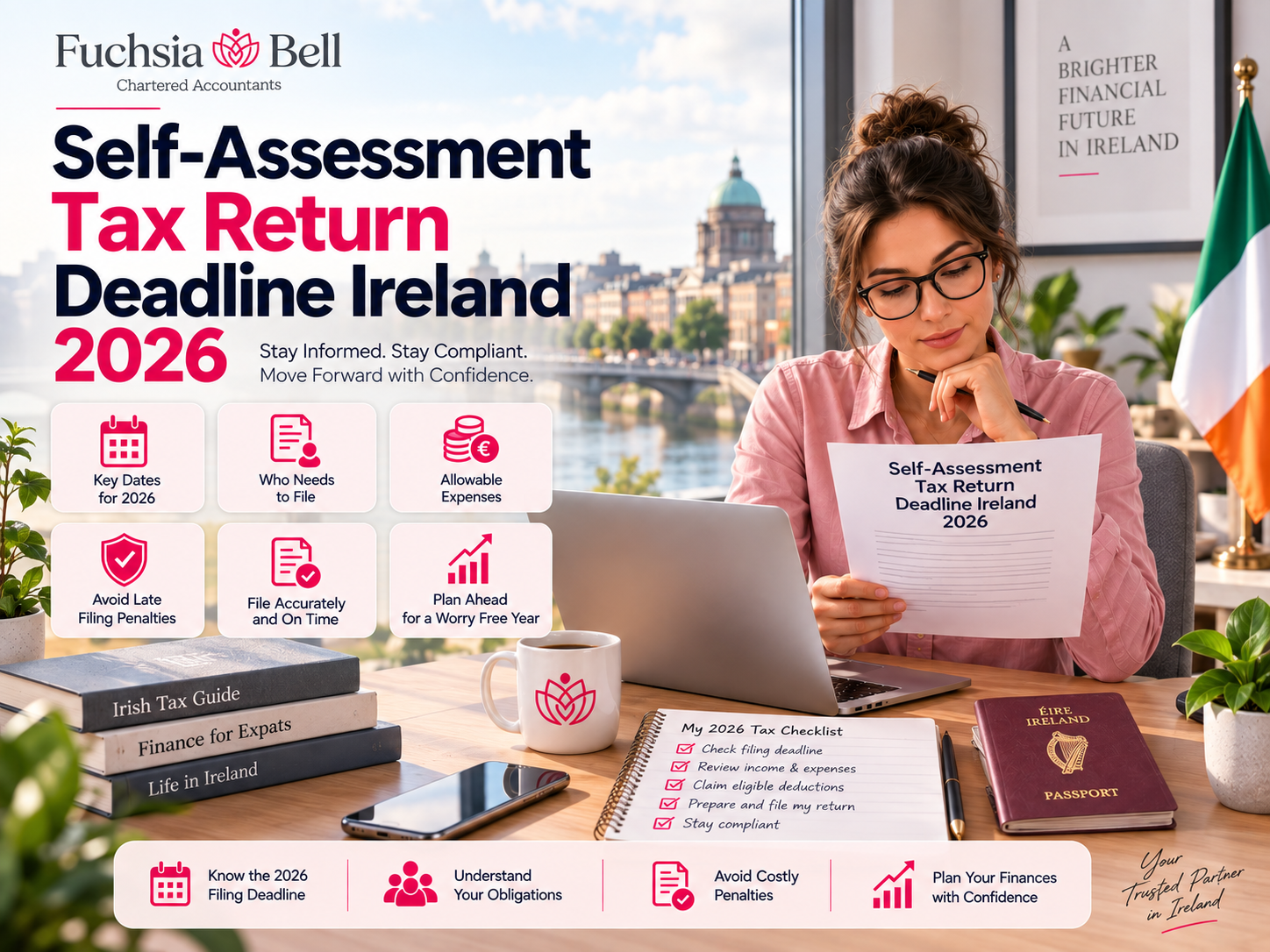
Form 11 for the 2025 tax year is due by 31 October 2026 if you’re filing on paper. File and pay through ROS instead, and Revenue pushes that date to 18 November 2026. Miss either one and a surcharge lands on your entire tax bill, not just the part that’s overdue.
That single fact catches out more people than it should. Someone starts freelancing alongside a PAYE job, or buys a second property and starts renting it out, and has no idea they’ve just become a “chargeable person” under Revenue’s self-assessment system. There’s no minimum income threshold that exempts you. Earn €8,000 from weekend consulting work and you’re required to file, the same as someone earning six figures.
When Is the Self-Assessment Deadline for 2026?
Two dates matter, and which one applies depends entirely on how you file.
| Filing Method | Deadline | Condition |
| Paper return | 31 October 2026 | Form posted to Revenue, tax paid by the same date |
| ROS (online) | 18 November 2026 | Both filing and payment completed through ROS |
The ROS extension isn’t automatic just because you’re a ROS user. Both actions have to happen through the system. File online but post a cheque, and the extra weeks disappear. Pay online but submit a paper return, same result. Revenue treats the two as a pair, not two separate favours.
What Happens If You File After the Deadline?
A surcharge applies to your full tax liability, regardless of how small the overdue amount is. File within two months of the deadline and it’s 5% of your total liability, capped at €12,695. Go beyond two months and it jumps to 10%, capped at €63,485.
Interest runs separately, at roughly 0.0219% per day on whatever remains unpaid. It’s not large day to day, but it compounds the longer a balance sits unpaid, and Revenue doesn’t waive it for genuine oversight. The surcharge applies whether or not you actually owe tax for the year. Filing late while due a refund still triggers it. Most of what we handle through our tax services in the weeks before October is aimed squarely at avoiding this stage altogether.
Preliminary Tax Is Where Most First-Time Filers Get Caught
The October or November date isn’t only for settling last year’s bill. You’re also required to pay preliminary tax for the current year, on the same date, in the same payment. Revenue accepts whichever of the following is lowest, so you’re never required to pay more than necessary to avoid interest.
90% of your actual liability for the current year, which requires an accurate estimate before the year is even finished.
100% of your total liability for the previous year, the option most people use because it’s the simplest figure to calculate in advance.
105% of your liability from two years prior, but only if you pay by direct debit.
First-year filers get a genuine shortcut here that almost nobody explains clearly. Choose the “100% of the previous year” option in your first year of self-assessment, and that previous year’s liability is normally nil, since you weren’t self-assessed yet. In practice, that means many first-time filers owe no preliminary tax at all in year one, only the balance (if any) for the year just gone. Get the estimate wrong on the low side in later years, though, and Revenue charges interest on the shortfall from the original due date, not from whenever the mistake gets caught.
A Shortcut Most People Never Use
Submit a completed paper Form 11 by 31 August, and Revenue will run the self-assessment calculation for you and confirm exactly what’s owed, weeks before the October pressure even starts. This only applies to paper filers, and it doesn’t move the payment deadline itself. What it removes is the guesswork in the final weeks, which is when most late or rushed filings actually happen. Filing early also gives a much clearer picture for deciding how to handle preliminary tax on the current year, since the previous year’s number is already confirmed rather than estimated.
Form 11 or Form 11S: Which One Actually Applies
Most self-assessed taxpayers file Form 11, which covers income from every source alongside reliefs, capital gains, and preliminary tax in a single return. A shorter version, Form 11S, exists for straightforward cases and can be submitted where affairs are simple enough not to need the full form. Filing a Form 12 instead of a Form 11 for a year when Form 11 was actually required doesn’t resolve the obligation; Revenue treats the return as incorrect once it catches the mismatch, and the surcharge clock runs from the original Form 11 deadline regardless.
Who Actually Has to File
Four groups make up almost everyone caught by self-assessment in Ireland. Sole traders and freelancers. Company directors holding more than 15% of a company’s shares. Landlords with rental income above the reporting threshold. Anyone with non-PAYE income over €5,000 a year, which covers foreign dividends, investment income, and one-off payments that fall outside payroll.
PAYE employment hides this obligation well, because Revenue handles most people’s tax automatically through payroll. That system stops covering you the moment income starts arriving from somewhere else. Getting the deductions right at that point makes a real difference to what’s actually owed, and reviewing self-employed tax deductions before filing is worth doing properly rather than guessing what qualifies.
If Your Return Also Involves a Property Sale
Form 11 covers more than income. Disposals during the year, a property sale, a share sale, get declared on the same return, with the annual €1,270 exemption applied before the 33% rate applies to the remainder. The payment timing for that portion runs on a separate schedule from income tax, worth checking against your own capital gains tax position if a disposal happened this year.
Getting the Credits and Reliefs Right, Not Just the Filing
Filing on time avoids the surcharge. It doesn’t automatically mean the amount owed is correct. Personal and employee tax credits, medical expense relief, and pension contributions all reduce the final figure, and they only apply if they’re actually claimed on the return. Working through what you can claim in tax credits before submitting tends to matter more to the final bill than the filing method itself.
Frequently Asked Questions
What if I miss the 18 November ROS deadline as well?
The same surcharge structure applies. 5% up to two months late, 10% after that, both capped, plus daily interest on any unpaid balance from the original due date.
Do I still owe preliminary tax if this is my first year filing?
Usually very little or nothing, if you choose the 100% of previous year option, since that figure is normally nil for a first-time filer. You’ll still owe any balance due on the actual income earned in the year just gone.
Is there any way to get more time if I have a genuine reason for filing late?
Revenue can consider a reasonable excuse in specific circumstances, but this isn’t automatic and needs to be raised with them directly rather than assumed. Filing something rather than nothing, even an estimate, generally limits the damage more than waiting.
What’s the difference between Form 11 and Form 12?
Form 11 is for chargeable persons with significant non-PAYE income, self-employment, or director status. Form 12 is a shorter return for PAYE employees with smaller amounts of additional income that don’t meet the Form 11 threshold.
Does the surcharge apply even if I’m due a refund?
Yes. The surcharge is calculated on the tax liability for the year, not the balance owed after the deadline. Filing late while due money back still triggers it.
Where This Actually Gets Decided
The deadline itself is fixed. What varies from person to person is how much the preliminary tax estimate, the reliefs claimed, and the timing of any disposals actually cost. Getting a second set of eyes on the return before submission, particularly the first time through, usually catches more than the surcharge rules alone protect against. We handle income tax return filing and preliminary tax calculations for clients across Ireland, so the October and November dates stop being a scramble.
A fuller picture of how online chartered accountants work day to day, including how tax and compliance work actually gets handled remotely, is covered on geroconnor.info, alongside a broader look at structuring an Irish SME for 2026.